Transmission system analysis / PSSE project
Power Flow Convergence and PAR-Based Loss Minimization
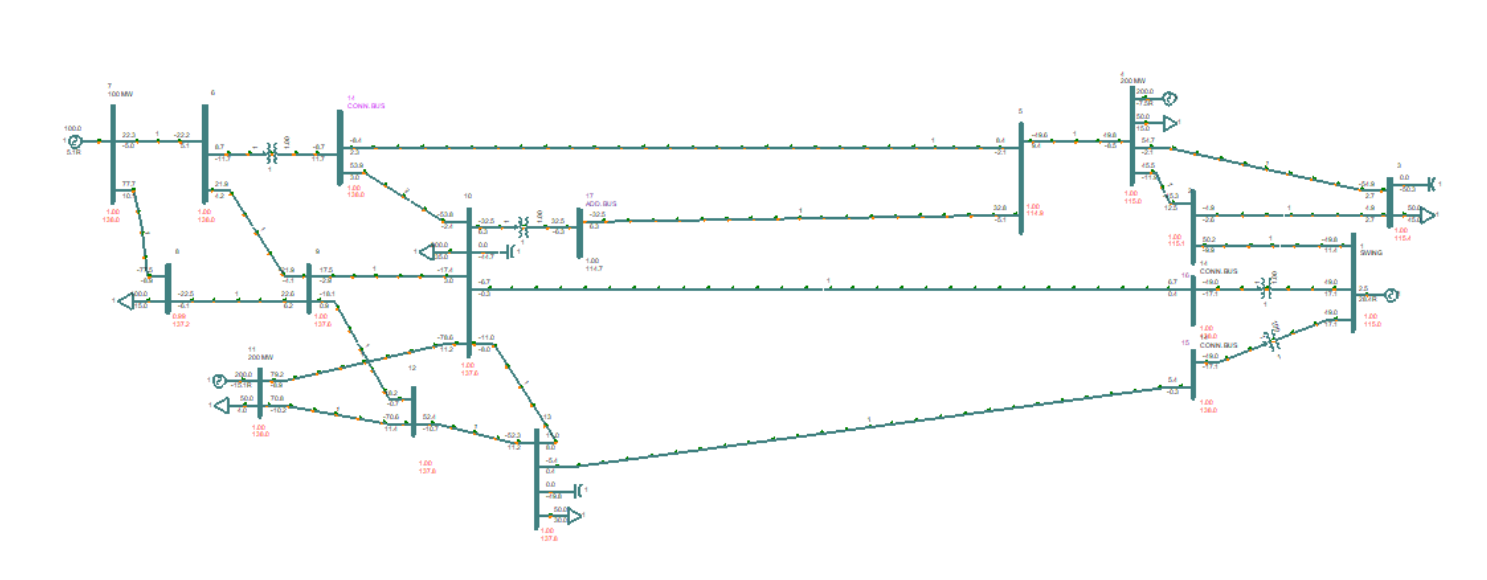
Modeled an IEEE 14-bus-derived transmission network, solved AC power flow, constrained bus voltages, minimized losses, and used a phase angle regulator to relieve the most heavily loaded branch.
Methods
- PSSE
- AC Newton-Raphson power flow
- Per-unit line modeling
- Fixed shunt compensation
- Phase angle regulator
Key outcomes
- Kept bus voltages within the 0.98-1.02 p.u. target range.
- Reduced total system losses from 2.47 MW to 2.36 MW after PAR installation.
- Reduced target-line active power flow from 79 MW to 58 MW.
Distribution protection / Simulink project
Simulink-Based Distribution Feeder Protection Coordination
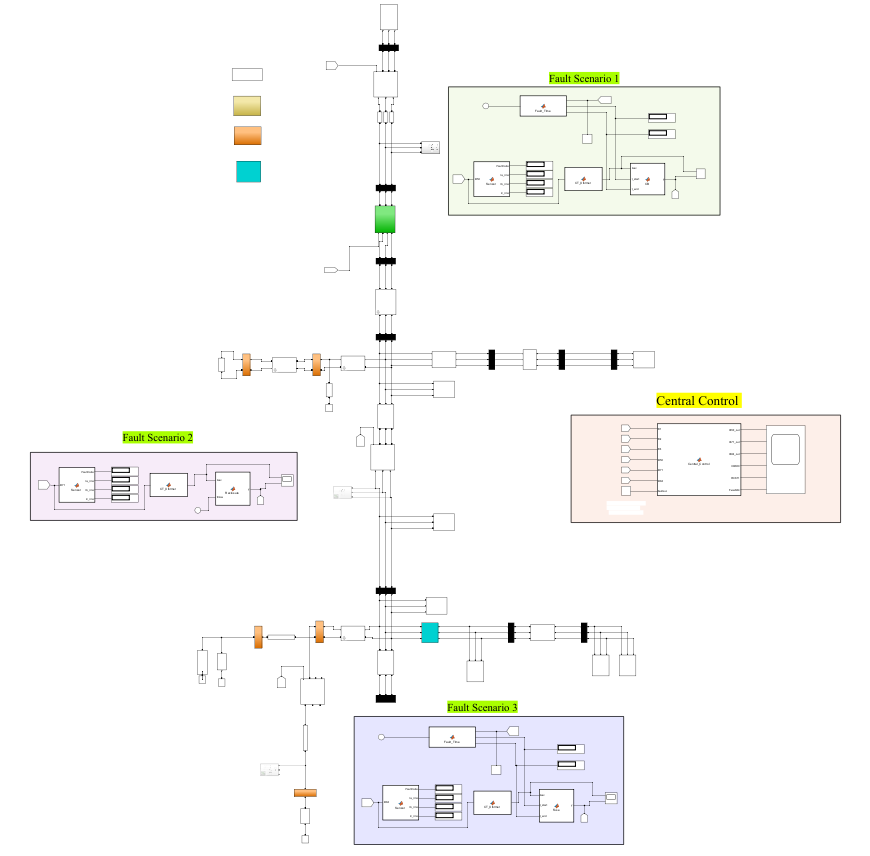
Built an IEEE 13-node feeder study in Simulink, simulated normal and faulted operation, and implemented centralized coordination for a circuit breaker, recloser, and lateral fuse using time-current characteristic logic.
Methods
- MATLAB/Simulink
- IEEE 13-node feeder
- TCC lookup tables
- Breaker, recloser, and fuse logic
- Single-line-to-ground fault studies
Key outcomes
- Evaluated substation, mid-feeder, and lateral fault cases.
- Modeled recloser trip/reclose behavior and fuse-saving coordination.
- Verified device status and current response through centralized control plots.
Machine learning for power systems / ML project
Noise-Robust Classification of Power Quality Disturbances
Generated synthetic power quality disturbance data under frequency variation and noise, extracted discriminative LDA features, and compared classical machine-learning models for multi-class disturbance classification and anomaly detection.
Methods
- MATLAB
- Python
- LDA feature extraction
- SVM, KNN, Random Forest, Naive Bayes
- One-Class SVM anomaly detection
Key outcomes
- Generated 29 disturbance classes across 48-52 Hz frequency variation.
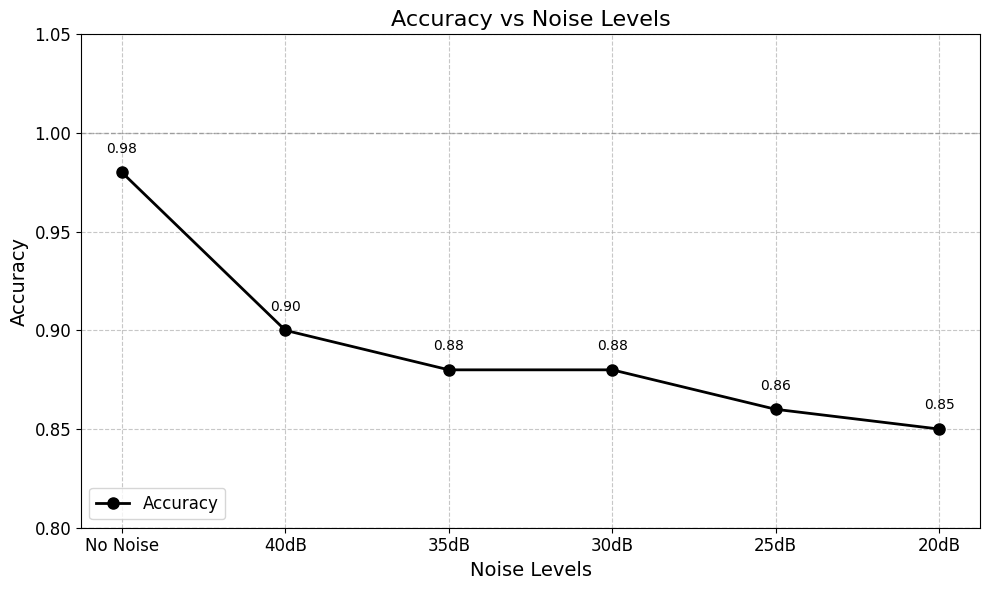
- Compared classifier robustness across no-noise and 20-40 dB noise conditions.
- Observed SVM as the strongest performer at the highest noise level.